Top 10 Benefits of ERP Software for Small and Medium Businesses
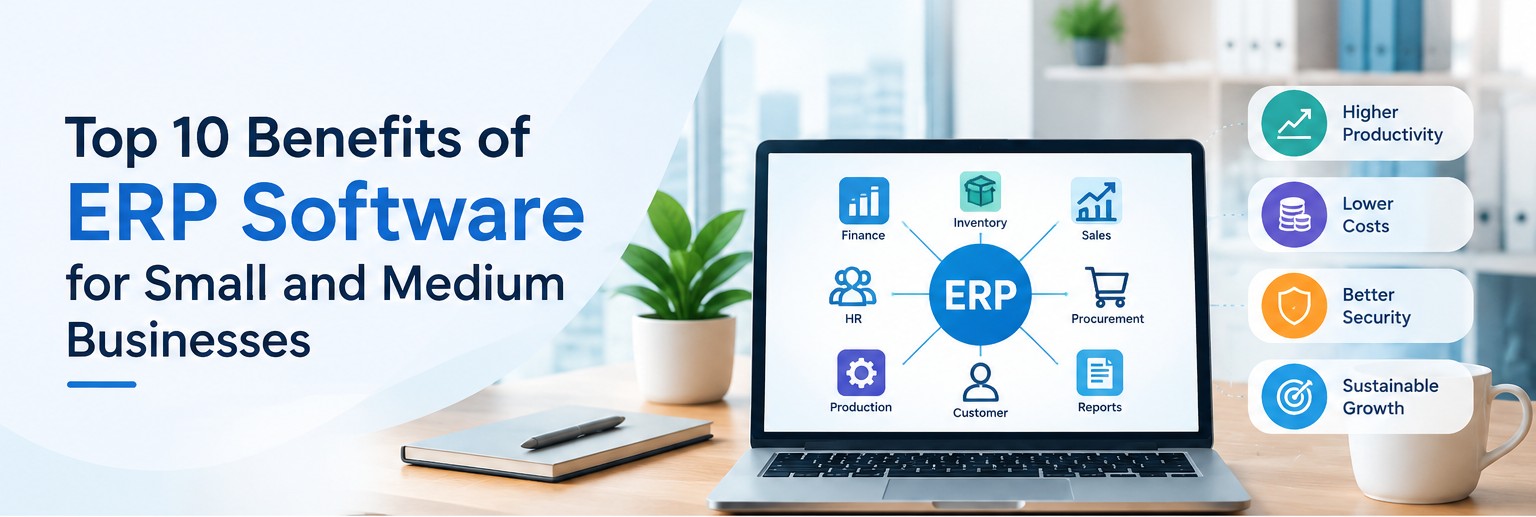
Growing businesses often struggle with disconnected data, manual workflows, and inefficient business processes. As operations expand, relying on spreadsheets or multiple standalone applications can create communication gaps, delays, and costly errors. Implementing an erp system for small businesses enables organizations to centralize operations, automate routine tasks, and gain real-time visibility into every aspect of the business.
Understanding the erp system and its benefits is essential for businesses looking to improve productivity, reduce operational costs, and support long-term growth. Whether you operate in manufacturing, retail, healthcare, distribution, or professional services, the right ERP solution provides a solid foundation for efficient and scalable operations.
Top 10 Benefits of ERP Software for Small and Medium Businesses
1. Centralized Data and a Single Source of Truth
One of the biggest challenges for growing businesses is managing information across multiple departments. When finance, sales, inventory, procurement, and HR use separate systems, data becomes fragmented and difficult to manage.
An ERP solution centralizes all business information into one integrated platform, ensuring every department works with accurate and up-to-date data. This is one of the most important aspects of an erp system and its benefits, as it improves transparency and eliminates duplicate data entry.
Key Benefits:
- Real-time access to business information.
- Improved collaboration between departments.
- Elimination of duplicate and inconsistent data.
- Faster and more informed decision-making.
2. Significant Long-Term Cost Savings
Although implementing ERP software requires an initial investment, it delivers substantial long-term savings by reducing manual work, improving operational efficiency, and minimizing costly errors. Instead of maintaining multiple software applications for different departments, businesses can manage everything through one integrated system.
Key Benefits:
- Lower software maintenance costs.
- Reduced administrative expenses.
- Better resource utilization.
- Fewer financial errors caused by manual data entry.
3. Enhanced Productivity Through Process Automation
Employees often spend valuable time performing repetitive administrative tasks such as invoice creation, payroll processing, purchase order management, and report generation. ERP software automates these routine activities, allowing employees to focus on strategic initiatives, customer engagement, and business growth.
Key Benefits:
- Automated workflows.
- Faster approval processes.
- Reduced manual intervention.
- Increased employee productivity.
4. Real-Time Reporting and Better Decision Making
Business leaders require accurate information to make confident decisions. Traditional reporting methods often rely on manual data collection, which delays important business insights. ERP software provides customizable dashboards and real-time analytics that help management monitor key performance indicators (KPIs), financial performance, inventory levels, and operational efficiency.
Key Benefits:
- Live dashboards.
- Instant financial reports.
- Accurate business forecasting.
- Faster strategic decisions.
5. Improved Compliance and Data Security
Businesses must comply with tax regulations, financial reporting standards, and industry-specific compliance requirements. ERP software simplifies compliance by maintaining complete audit trails and automating financial reporting. Modern ERP platforms also include advanced security features that protect sensitive business and customer information.
Key Benefits:
- Automated tax calculations.
- Secure user access controls.
- Complete audit history.
- Improved data protection.
6. Efficient Inventory and Supply Chain Management
Inventory management directly impacts profitability. Overstocking increases storage costs, while stock shortages affect customer satisfaction and sales. An erp system for small businesses provides real-time inventory tracking, demand forecasting, procurement management, and warehouse visibility to optimize the entire supply chain.
Key Benefits:
- Accurate inventory tracking.
- Better demand forecasting.
- Reduced inventory carrying costs.
- Improved supplier management.
7. Better Customer Service and Relationship Management
Customer satisfaction plays a vital role in business success. ERP software integrates customer information, sales history, inventory status, and support records into one centralized platform. This allows customer service teams to respond quickly, resolve issues efficiently, and provide personalized experiences. Understanding the erp system and its benefits also means recognizing how integrated customer data contributes to stronger relationships and improved customer retention.
Key Benefits:
- Faster customer support.
- Personalized customer interactions.
- Improved order tracking.
- Increased customer loyalty.
8. Simplified Financial Management
Managing accounts, cash flow, payroll, accounts payable, and receivables manually increases the risk of errors and delays. ERP software integrates every financial process into a single platform, giving finance teams complete visibility and improving overall financial accuracy.
Key Benefits:
- Automated accounting processes.
- Faster financial closing.
- Accurate profit and loss reporting.
- Multi-currency support for global operations.
9. Scalability and Business Growth
As businesses grow, operational complexity also increases. An erp system for small businesses is designed to scale alongside business expansion without requiring a complete software replacement. Modern ERP platforms use modular architecture, allowing businesses to start with essential modules and gradually add advanced capabilities as requirements evolve.
Key Benefits:
- Flexible module selection.
- Easy expansion across multiple branches.
- Support for increasing users and transactions.
- Adaptability for changing business needs.
10. Improved Collaboration Across Departments
Departments often struggle when information is stored in separate systems. ERP software breaks down these silos by enabling every team to access shared information in real time. Whether sales, finance, procurement, production, or HR, every department works with synchronized data, resulting in faster communication and improved operational efficiency.
Key Benefits:
- Better cross-functional collaboration.
- Increased organizational transparency.
- Faster project execution.
- Improved overall business efficiency.
Why Small and Medium Businesses Should Invest in ERP Software
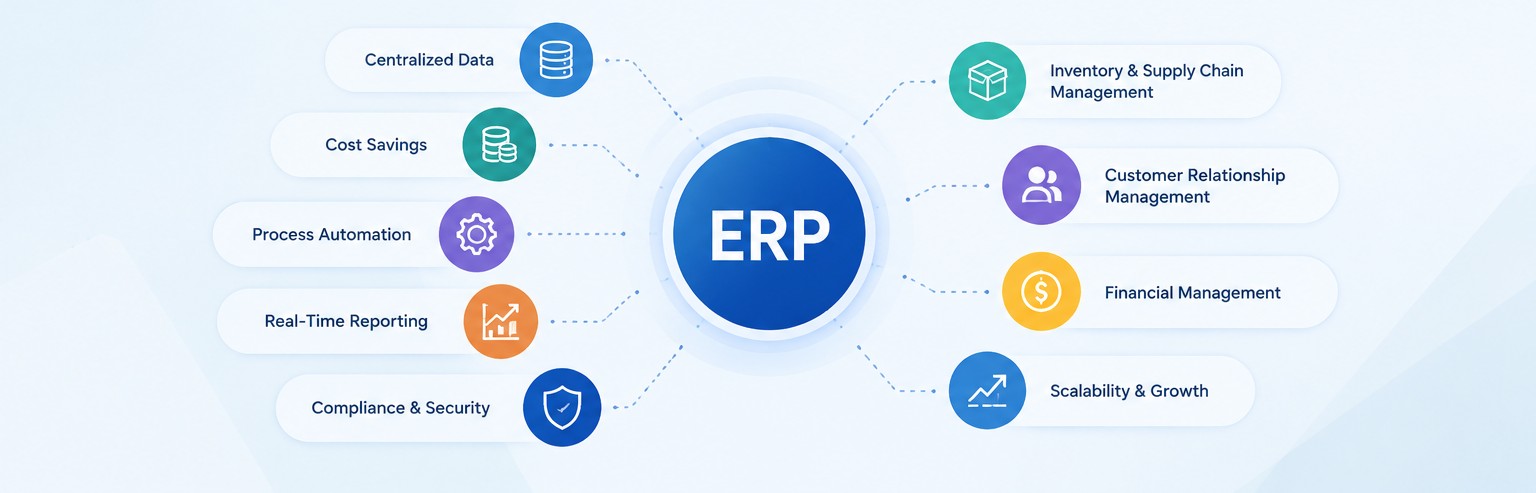
For small and medium businesses, every decision directly impacts growth and profitability. Investing in ERP software is no longer limited to large enterprises. Cloud-based ERP solutions have made enterprise-grade technology affordable, flexible, and easier to implement.
An integrated ERP platform helps businesses:
- Reduce operational costs.
- Improve employee productivity.
- Deliver better customer experiences.
- Make data-driven decisions.
- Prepare for future growth.
- Increase profitability.
Whether your business operates in manufacturing, retail, healthcare, logistics, education, distribution, or service industries, ERP software provides the tools needed to streamline operations and remain competitive.
Conclusion
Choosing the right erp system for small businesses is a strategic investment that supports long-term business success. From centralized data management and workflow automation to financial control and real-time reporting, ERP software helps organizations improve efficiency, reduce costs, and make smarter business decisions.
Understanding the erp system and its benefits enables businesses to adopt technology that not only solves current operational challenges but also prepares them for sustainable growth. As your organization expands, a reliable ERP solution provides the flexibility, scalability, and insights needed to stay competitive in an evolving marketplace.
If you're looking for a customized ERP solution tailored to your business processes, Codea Technologies offers scalable ERP solutions designed to improve productivity, simplify operations, and accelerate business growth.
Frequently Asked Questions (FAQs)
What is an ERP system?
An ERP (Enterprise Resource Planning) system is integrated business management software that connects departments such as finance, sales, inventory, procurement, HR, manufacturing, and customer management into one centralized platform.
Why is an ERP system important for small businesses?
An ERP system helps small businesses automate routine tasks, eliminate data silos, improve collaboration, enhance reporting, and make better business decisions while supporting future growth.
How long does ERP implementation take?
Implementation timelines depend on the size of the organization, business complexity, customization requirements, and selected modules. Most ERP implementations take anywhere from a few weeks to several months.
Is cloud ERP suitable for small and medium businesses?
Yes. Cloud ERP offers lower upfront costs, faster deployment, automatic updates, improved scalability, and secure remote access, making it an ideal choice for growing businesses.
Which industries benefit the most from ERP software?
ERP software benefits a wide range of industries, including manufacturing, retail, healthcare, logistics, construction, education, distribution, hospitality, and professional services.
Can ERP software be customized for different business needs?
Yes. Modern ERP solutions are highly customizable and modular, allowing businesses to add features and workflows based on their operational requirements without replacing the entire system.
For more details
Get in Touch