Advanced Cyber Security Solutions: What They Are and Why Your Business Needs Them
A single stolen password can be enough to expose customer records, freeze billing, or take a website offline for days. For a growing company, the fallout is rarely just technical. Lost sales, frustrated clients and an expensive clean-up usually follow.
Antivirus software and firewalls still matter, but they were built mainly to stop threats that are already known. Advanced cyber security solutions go further. They help you uncover hidden weaknesses and notice suspicious behaviour as it happens.
Where Standard Protection Falls Short
Basic tools are a solid starting point, but they leave certain gaps open.
Everyday Risks That Basic Tools Miss
Most incidents don't begin with a dramatic attack. They begin with ordinary oversights:
- A website plugin that was never updated
- A former employee's account that is still active
- A cloud storage folder accidentally set to public
- A login used from two countries within the same hour
A firewall will not flag any of these. Someone has to look for them, test them, and watch for signs of misuse.
What "Advanced" Really Means
It does not mean owning the longest list of tools. It means security is a continuous loop: find the weak spots, test them, watch for trouble, respond when needed, and improve afterwards.
Why Businesses Need Advanced Cyber Security Solutions
Customer Trust and Data Protection
Customers share names, addresses, and payment details on the assumption that you will look after them. Checking who has access to what, and monitoring for unusual activity, reduces the chance that this information leaks.
Fewer Interruptions to Daily Work
When a server fails, or an account is hijacked, orders, support tickets, and invoicing can stall at once. Knowing which systems matter most, and having a response plan ready, shortens recovery time. No measure removes risk entirely, but preparation limits the disruption.
Safer Growth and Compliance
Every new app, cloud tool, or team member changes your exposure. Regular reviews keep security aligned with the business as it grows. Many clients and regulators also expect evidence of good practice. The rules that apply depend on your industry, location, and contracts, and they can change over time, so confirm current requirements before relying on any checklist.
The Main Advanced Cyber Security Services Explained
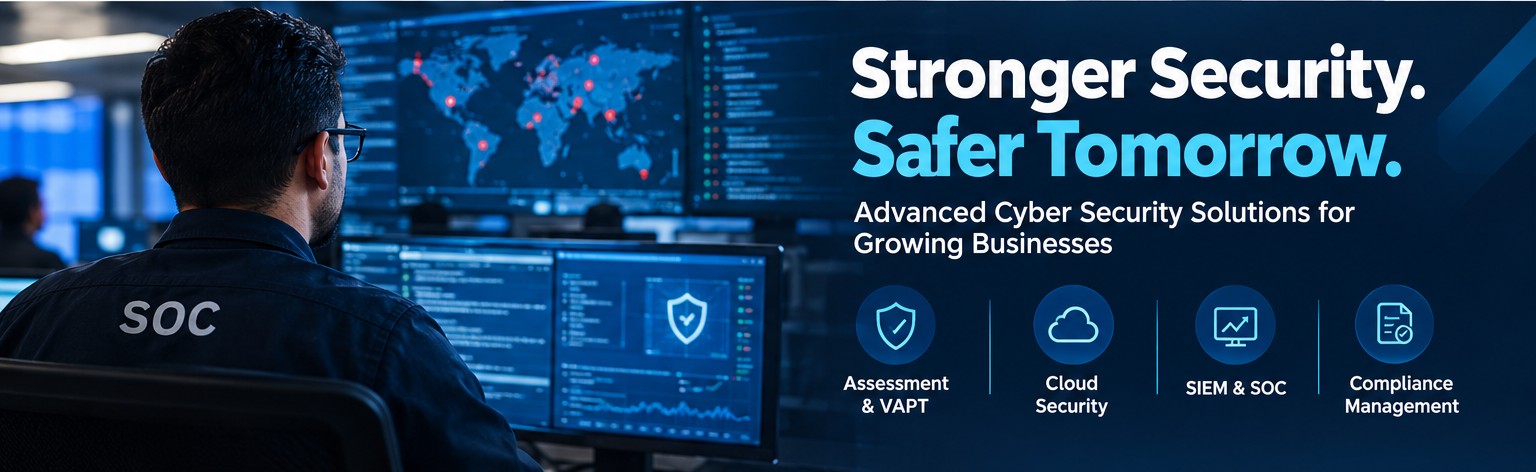
Cybersecurity Assessment
This is a structured review of your networks, applications, devices, and settings. It typically uncovers outdated software, excessive permissions, and risky configurations. A good assessment ends with a prioritised action list, not just a pile of findings.
Vulnerability Assessment and Penetration Testing (VAPT)
A vulnerability assessment scans for known weaknesses. Penetration testing goes a step further: with written permission and a clearly defined scope, a tester tries to exploit selected weaknesses to show what a real attacker could achieve. VAPT is especially useful before launching a product or after major changes. Retesting afterwards confirms that fixes actually worked.
Cloud Security
Cloud services are flexible, but one wrong setting can expose data. Cloud security reviews check access rights, storage settings, and monitoring so that convenience does not become a loophole.
SIEM and SOC: The Data and the People
Think of a SIEM as the recording system in a building's security setup. It gathers logs from servers, apps, and devices, then links related events together, such as a failed login streak followed by a successful one from a new location.
A Security Operations Centre (SOC) is the control room staffed by analysts. They review alerts, decide what is genuine, and coordinate the response. One without the other falls short: data nobody reads is wasted, and analysts without good data are working blind.
Compliance Management
This service helps you work out which requirements apply, compare your current controls against them, and organise the documents auditors ask for. Passing an audit is a useful milestone, but it does not guarantee that every system is secure.
A Practical Example: A Growing Online Retailer
Consider a hypothetical 40-person online store that is about to launch a mobile app and move its data to the cloud.
- Assessment: The review finds two admin accounts belonging to ex-contractors and a public storage folder.
- VAPT: Testers check the checkout and login flows and discover that an old API accepts requests it should reject.
- SIEM: Logs from the website, cloud account, and payment system are brought together in one place.
- SOC: Analysts watch for odd activity during the busy sale season.
- Fixes: The team closes the public folder and API flaw first, because both are reachable from the internet, then removes the stale accounts.
This is an illustration, not a real case, but it shows how the services complement each other.
How to Choose the Right Services for Your Business
No single package suits everyone, so begin with your own situation.
Three Questions to Ask Yourself First
- Which data would cause the most harm if it were exposed?
- Which system cannot be down for more than a few hours?
- Who on your team can respond to an alert at 2 a.m.?
Honest answers will usually point you towards where to begin.
Match Services to Your Situation
- Launching an app or website: assessment and VAPT
- Using many cloud tools: cloud security review and SIEM
- Small team, no night cover: managed SOC
- Clients asking for audit evidence: compliance support
Questions to Ask a Provider
When comparing advanced cyber security services, ask what the final report will contain, whether retesting is included, how alerts are escalated, and who is responsible outside office hours. Clear answers matter more than a long feature list.
Conclusion
Strong protection begins with knowing what you hold, where it is exposed, and who would respond if something went wrong. Advanced cyber security solutions should be chosen for your systems and priorities, not for the number of tools on offer. No provider can promise that incidents will never happen, so plan to review your controls whenever your business changes.
Codea Technologies offers cybersecurity assessments, VAPT, SOC, SIEM, cloud security, and compliance management. Reviewing these against your own requirements is a practical way to decide which area deserves attention first.
Frequently Asked Questions
1. Is antivirus software with a firewall enough for a small business?
It is a good foundation, but not a complete defence. These tools will not reveal unpatched applications, unused accounts, or misconfigured cloud storage, which is where testing and monitoring help.
2. How often should security testing be done?
There is no single schedule. Many organisations test at least once a year and again after major changes such as a new application, a platform migration or a security incident. Your risk level and contractual obligations should guide the timing.
3. What happens after a penetration test?
You normally receive a report listing findings, risk ratings, and recommended fixes. Your team then works through the fixes, and a retest verifies that the issues are resolved.
4. Should we build an in-house team or outsource monitoring?
It depends on budget, available skills, and whether you need round-the-clock coverage. Many businesses keep decision-making in-house and use a managed provider for monitoring and specialist testing.
5. Can these services help with compliance audits?
Yes, they can help identify gaps, review controls, and prepare documentation. Actual compliance depends on the rules that apply to you and how well fixes are carried out.
6. How much do these services cost?
Pricing depends on scope, system size, and engagement type, such as a one-time assessment, project-based work, or ongoing monitoring. Costs change over time, so request a quote based on your own environment.