What's Next in AI: 2025 Trends Shaping the Digital Landscape

Introduction
AI isn't experimental anymore. It's become the bedrock of how we're building the next wave of digital transformation. And as we move through 2025, we're seeing something remarkable happen: breakthroughs in autonomous systems, multimodal learning, reasoning models, and responsible governance are converging all at once, fundamentally changing how businesses, governments, and everyday consumers interact with intelligent systems.
Here's what strikes me most about recent research: AI is making a decisive shift from being assistive to becoming truly agentic. We're moving past systems that just predict and recommend, toward ones that can actually reason, plan, and act on their own. That's a big deal.
In this piece, I want to walk you through the top AI trends that are reshaping the digital landscape right now, drawing from leading research and what we're seeing play out in the industry.

1. Agentic AI & Autonomous Systems
Agentic AI represents the biggest leap we've seen in intelligent automation. Think of it this way: instead of static language models that wait for your instructions, we now have systems that can make autonomous decisions, plan ahead, and collaborate with other AI agents. They're less like tools and more like AI coworkers executing complex workflows with minimal human involvement.
What makes these systems special? According to research from Chawla and colleagues in the Journal of AI, Robotics & Workplace Automation, agentic systems can self-correct, work through problems iteratively, and use tools to solve challenges—exactly what you need for enterprise-scale autonomy. Recent frameworks emphasize building these with modular architectures, safety guardrails, and governance protocols baked in from the start.
The impact is real. Organizations deploying multi-agent systems for tasks like economic research, customer service, and software testing are seeing workflow efficiency jump by up to 60%. We're not just prompting AI anymore—we're partnering with it. And honestly, how well you can orchestrate these autonomous workflows is quickly becoming what separates the leaders from everyone else.

2. AI Reasoning Models
The new generation of AI models does something fundamentally different: they actually reason through problems instead of just recognizing patterns. Rather than responding based purely on statistical probabilities, these systems can analyze chains of logic, simulate different outcomes, and catch their own mistakes.
Research from Coworker and Morgan Stanley's AI Frontier Report shows how reasoning-centric models are revolutionizing everything from natural language processing to image generation to programming. The emerging architectures combine traditional language model capabilities with symbolic logic and reinforcement learning from human feedback, getting us close to human-level decision accuracy.
For businesses, this matters because reasoning models will power autonomous decision systems—financial forecasting, supply chain optimization, you name it. Companies will be able to make real-time, data-driven decisions with way less oversight than before.
3. Multimodal AI
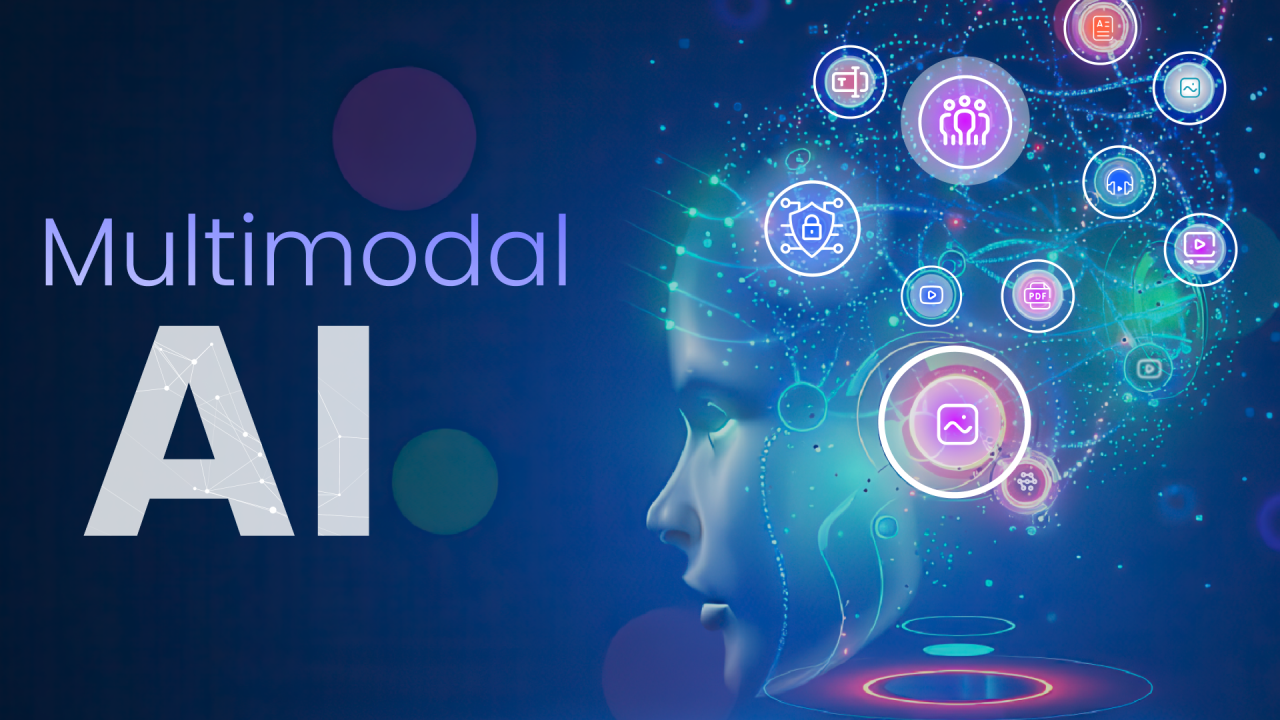
Multimodal AI is where things get really interesting. These systems integrate text, images, audio, and video simultaneously to understand context the way humans do. Google DeepMind's Gemini Technical Report lays out how this approach lets AI interpret and generate content across completely different formats at the same time.
The technical foundation is pretty clever. Multimodal transformers use shared embeddings and cross-attention layers to fuse data from different sensory inputs. This opens up some fascinating use cases:
- Medical diagnostics that combine written reports with radiology scans
- Retail AI that understands both product images and customer reviews together
- Conversational AI that processes tone, gesture, and language as one integrated signal
As enterprises adopt these multimodal systems, data silos start disappearing. We're heading toward unified, intuitive AI experiences that work seamlessly across industries.
4. Generative AI Maturation
By 2026, over 75% of enterprises will have moved Generative AI from pilot projects to full operational deployment. This isn't about experimentation anymore—it's about building dedicated data pipelines, governance systems, and real-time analytics infrastructure to support AI at scale.
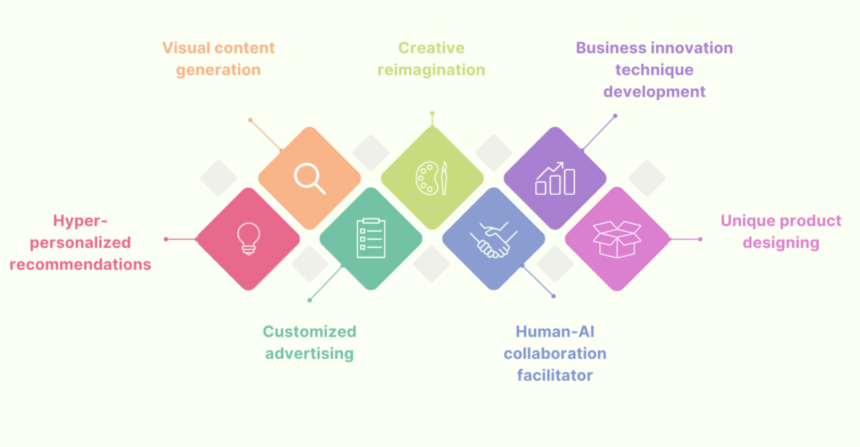
Generative AI is already enabling enterprises to design user interfaces, write marketing content, and generate synthetic datasets for training smaller models. The human workload reduction is dramatic. But as Medium highlighted in their analysis, operationalization brings its own challenges: keeping data fresh, controlling costs, and maintaining governance. That's pushing companies toward hybrid cloud-native architectures optimized specifically for large language model performance.
5. Responsible AI & Compliance
As AI scales up, governance becomes non-negotiable. This year, ISO/IEC 42001 certification is setting the global benchmark for AI management systems. Meanwhile, the EU AI Act—the world's first comprehensive AI regulation—is enforcing compliance across different risk tiers, with penalties that can hit €35 million.
Academic research underscores the need for transparent agentic workflows and explainable AI to ensure accountability. Enterprise platforms are responding by embedding compliance at the infrastructure level, tracking data lineage, maintaining audit logs, and building in model explainability through integrated ModelOps tools.
The outcome? Organizations that prioritize ethical AI and proactive compliance won't just mitigate regulatory risk—they'll build stronger stakeholder trust and better long-term market reputation.
6. Custom Silicon & AI Hardware Innovation
Every leap in AI capability requires a corresponding leap in hardware efficiency. That's why major tech firms are designing AI-optimized chips and application-specific semiconductors that balance performance, cost, and energy efficiency.
As Morgan Stanley notes, we're seeing real collaboration between chipmakers, hyperscalers, and software vendors. This is producing an ecosystem of AI-ready hardware—Tensor Processing Units, Neural Processing Units, and domain-specific accelerators optimized for inference workloads.
For enterprises, custom silicon enables faster, more secure AI deployment at scale. It's a critical enabler as companies operationalize AI across data centers, edge devices, and hybrid environments.
The Road Ahead
The AI revolution of 2025 comes down to three things: autonomy, reasoning, and responsibility. Agentic systems will handle dynamic workflows. Reasoning models will enable intelligent decision-making. Multimodal architectures will make AI more perceptive. And governance frameworks will make it trustworthy.
As enterprises embrace these advancements, the next frontier isn't just smarter AI—it's AI that works alongside us: autonomous, explainable, and ethically aligned with human values. That's where we're headed.
For more details
Get in Touch